You’re running late. You’re brushing your teeth on autopilot, half-awake, possibly still in the mental fog of whatever you were dreaming about. And somewhere between the brushing and the spitting, the mirror gets involved. It always gets involved.
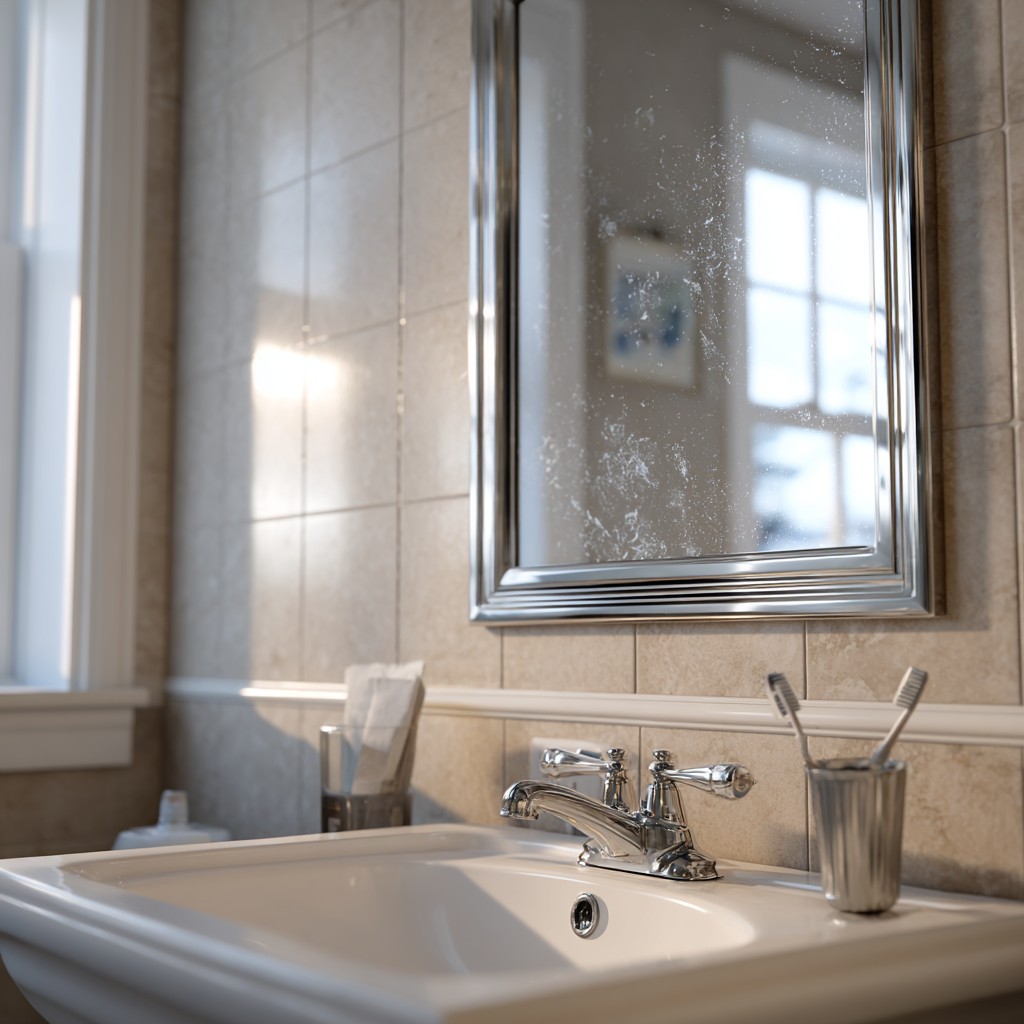
Toothpaste splatters on bathroom mirrors are one of those small, daily indignities that somehow never make it onto anyone’s cleaning priority list – until the light hits the mirror at just the right angle and suddenly it looks like you’ve been housing a Jackson Pollock exhibit in your bathroom. Then you grab whatever’s nearby, swipe at it, and end up with a mirror that’s somehow both smeared and still splattered, plus a new constellation of lint fibers from the paper towel you definitely should not have used.
Hi, I’m Bailey. I’ve cleaned a lot of mirrors professionally, and I’m here to tell you that streak-free mirrors are not a myth or a luxury reserved for fancy hotels. They’re completely achievable, even in a busy Baltimore bathroom, and I’m going to show you exactly how.
Why Toothpaste Is Basically the Worst Thing That Can Happen to a Mirror
Most people assume that cleaning a mirror is simple – spray something on it, wipe it off, done. And for a mirror that’s just got regular dust or light fingerprints on it, that’s roughly true. Toothpaste is a different situation entirely, and understanding why makes the whole cleaning process click into place.
Toothpaste is not just a liquid. It’s an abrasive paste – intentionally designed with mild grit to scrub your teeth – that also contains detergents, foaming agents, and humectants like glycerin or sorbitol that keep it moist. When it dries on a mirror, that cocktail of ingredients bonds to the glass surface and creates a residue that’s both chalky and slightly sticky. A quick dry wipe spreads it. A wet wipe that’s too saturated pushes it around without fully dissolving it. And most commercial glass cleaners, applied incorrectly, will lift the toothpaste residue and redistribute it in a thin film across the mirror – which is exactly where streaks come from.
The fix isn’t about scrubbing harder. It’s about using the right combination of moisture, solution, and technique.
The Tool That’s Ruining Your Mirror Without You Knowing
Before we talk solutions, we need to talk about paper towels.
I know. They’re right there. They’re convenient. They feel like the obvious choice in a bathroom context. But paper towels – even the “select-a-size” premium ones that cost more per roll than a decent lunch – leave lint on glass. They also don’t have enough consistent surface tension to pull solution cleanly off a mirror in one pass, which means you end up doing multiple wipes, redistributing moisture, and setting yourself up for streaks before you’ve even gotten started.
The non-negotiable upgrade here is a microfiber cloth. Specifically, a flat-weave microfiber cloth rather than a fluffy, terry-loop one. Flat-weave microfiber grabs and holds particles at the fiber level instead of pushing them around, leaves zero lint on glass, and gives you a level of control over the cleaning process that no paper product can match. If you don’t own one, a pack of six runs about five dollars on Amazon and they last for years. This is a very small investment with a very dramatic payoff.
Why the Lighting in Your Bathroom Is Working Against You
Here’s something most people never think about: the lighting conditions under which you clean a mirror have a huge impact on how well you can actually see what you’re doing.
Overhead bathroom lighting, especially the kind that shines directly onto the mirror, washes out streaks and residue while you’re cleaning – making the mirror look clean when it isn’t. The classic smear only becomes visible later, when natural light hits the glass at an oblique angle and turns your mirror into a catalog of every cleaning mistake you made.
Before you start cleaning, try switching off the overhead light and letting natural light come in from a side window instead. If that’s not possible in your bathroom layout, use a small flashlight held at a low angle to the mirror surface. The raking light will make every smear, splatter, and streak immediately visible – and it’ll show you in real time whether your cleaning pass is actually working.
The Supporting Cast: Other Reasons Your Mirror Never Looks Clean
Toothpaste is the primary villain here, but it has accomplices. A few other habits and conditions are quietly undermining your mirror-cleaning efforts, and they’re worth knowing about.
Hairspray and Dry Shampoo Overspray
If anyone in your household uses hairspray, dry shampoo, or aerosol hair products anywhere near the bathroom mirror, that invisible mist is settling on the glass and creating a thin, lacquer-like film. Toothpaste splatters then stick to that film with extra enthusiasm, and regular glass cleaner won’t fully cut through the combination. A small amount of rubbing alcohol on your microfiber cloth, applied before your main cleaning pass, dissolves hairspray residue effectively and gives you a genuinely clean surface to work with.
Excess Moisture and Ventilation Issues
Baltimore summers are humid, and bathrooms with poor ventilation compound that problem significantly. A bathroom mirror that’s regularly exposed to high humidity develops a thin mineral film over time from water vapor – especially if your water is on the harder side. This film doesn’t look like much on its own, but it makes streaks worse and makes toothpaste harder to fully remove. Running your bathroom exhaust fan consistently and wiping the mirror dry after steamy showers adds up to a real difference over weeks and months.
The Streak-Free Method That Actually Delivers
Alright, here’s the process. It takes about five to eight minutes for a standard bathroom mirror and requires exactly three things: a flat-weave microfiber cloth, white vinegar or a good glass cleaner, and a second dry microfiber cloth for the final pass. That’s it.
Step 1 – Loosen the Toothpaste First (2 Minutes)
This is the step most people skip, and it’s the reason most people end up with streaks.
Dry toothpaste splatters need to be dampened and loosened before you attempt to clean the whole mirror. Wet your microfiber cloth with warm water – not hot, not dripping, just damp – and press it gently over each splatter for a few seconds. You’re not wiping yet. You’re just rehydrating the dried paste so it releases from the glass without dragging.
Once you’ve gone over each visible splatter with the damp cloth and let the moisture do its work for 30 seconds or so, give those spots a gentle circular wipe to lift the loosened paste. At this point your mirror still won’t look clean – that’s fine. You’re just clearing the field before the main event.
Step 2 – Apply Your Cleaning Solution the Right Way (2 Minutes)
Here’s a technique shift that makes an enormous difference: do not spray your cleaning solution directly onto the mirror. Spray it onto your microfiber cloth instead.
Spraying directly onto a mirror saturates the glass unevenly, lets solution run into the frame or down the wall, and makes it much harder to control how much product you’re working with. Spraying onto the cloth gives you an even, controlled amount of solution and keeps the whole process tidier.
For the solution itself, you have two solid options. A 50-50 mix of white vinegar and distilled water in a spray bottle is cheap, effective, and cuts through both toothpaste residue and mineral film with no chemical smell once it dries. If you prefer a commercial option, any ammonia-free glass cleaner works well – ammonia-based cleaners can damage mirror backing over time with repeated use, so it’s worth checking the label.
Working from the top of the mirror to the bottom, wipe in slow, overlapping horizontal passes. Don’t scrub. Don’t go back over sections you’ve already done while the solution is still wet. One steady pass per section, top to bottom.
Step 3 – The Dry Buff (2 Minutes, Maximum Satisfaction)
This is where the streak-free result actually happens.
Take your second, completely dry microfiber cloth and buff the mirror in the same top-to-bottom pattern, using slightly more pressure than your cleaning pass. The dry cloth picks up any remaining moisture and solution residue, and the flat weave of the microfiber pulls it cleanly off the glass without redistributing it.
If you catch any remaining streaks during this pass – and with the low-angle lighting trick from earlier, you’ll see them clearly – hit just those spots with a tiny additional spritz on the cloth and a focused dry buff. You’re done when the glass looks uniformly clear in raking light. No clouding, no lines, no evidence of the morning toothpaste situation.
Making It Last Longer Than 24 Hours
The honest truth is that in an active bathroom, a perfectly clean mirror has about a 48-hour lifespan before the daily splatter cycle begins again. But you can extend that significantly with a couple of small habits.
A quick one-pass dry buff with a microfiber cloth every couple of days – 30 seconds, no solution needed – removes light, fresh splatters before they dry and bond to the glass. It’s infinitely easier to wipe away a fresh splatter than a week-old one, and this micro-habit keeps the full cleaning job to a genuine five-minute task rather than a negotiation session with dried toothpaste.
Consider keeping a dedicated microfiber cloth folded on your bathroom counter or tucked into a drawer within arm’s reach of the mirror. Accessibility is everything. If the tool is right there, you’ll use it. If you have to go find it, you won’t.
Clean mirrors, happy Bailey. That’s how this works.